Sleep Deprivation and Your Scalp: What Your Hair Reveals While You're Exhausted
The short answer
Chronic sleep deprivation reduces circulation to the scalp, disrupts the hair growth cycle and raises cortisol, which can lead to more hair loss, a dry or oily scalp and visibly thinner hair. A regular head spa treatment improves blood circulation in the scalp, reduces muscle tension and stimulates the hair follicles at a time when the body itself no longer has energy for recovery.
You do not have to be a hairstylist or dermatologist to see when someone has been sleeping badly for weeks. The hair loses its shine. The scalp looks duller. Sometimes there is more hair loss than usual, or conversely an overproduction of sebum because the skin is trying to compensate. These are small signals that clients rarely connect to their sleep pattern themselves.
Yet the connection is clear. Sleep is the time when the body recovers—and that also applies to the scalp. When that recovery time is structurally insufficient, you see it reflected in your hair.
What changes in the scalp with sleep deprivation
During deep sleep, blood flow to the skin and hair follicle increases. The hair follicle then receives oxygen and nutrients, and growth hormone (HGH) stimulates cell division in the hair root. Those who consistently sleep less than six hours miss out on part of this repair cycle each night.
At the same time, when you are sleep-deprived, cortisol, the stress hormone, rises. Elevated cortisol pushes hair follicles from the growth phase (anagen) into the resting phase (telogen) faster. That is also the mechanism behind telogen effluvium: diffuse hair loss that becomes visible six to twelve weeks after a period of stress. Clients rarely recognise that pattern, because the shedding only starts once the busiest period already seems over.
Furthermore, the scalp has its own microbiome that stays in balance at night. With sleep deprivation, the skin barrier weakens, which can lead to both dryness and excessive sebum production. Itching, flaking or greasy regrowth at the roots can all be signs of disturbed sleep, regardless of the hair care product someone uses.
What customers tell you—and what they don't
In practice, customers don't complain about lack of sleep. They complain about hair loss, an itchy scalp, or hair that looks “dull and heavy.” They ask if it's their shampoo, or the water pressure. The question “how is your sleep?” is rarely at the top of the list in a beauty conversation.
Still, it can be worthwhile to ask that question, not as a diagnosis, but as context. Because a head spa treatment has a different effect on someone who gets seven hours of rest every night than on someone who has been running on five hours for months. In the second case the treatment is more: a targeted intervention on a scalp that is struggling.
“A head spa treatment does in twenty minutes what the body should do overnight: activate blood circulation, release muscle tension, and nourish the scalp.’
How a head spa treatment helps
The combination of warm water, steam and massage that goes with a professional head spa treatment does, in twenty to forty minutes, exactly what the body should do at night: increase blood flow to the hair follicles, release muscle tension in the skull and neck, and supply the scalp with nutrients through the products applied.
The steam machine, included as standard with all fixed MediRelaxa head spa beds, opens the pores of the scalp so that treatment products work more effectively. For someone with a compromised skin barrier caused by chronic sleep deprivation, this is particularly relevant: the skin is more permeable and responds faster to care than when everything is closed up.
In addition, the massage has a direct effect on the nervous system. A calm, rhythmic massage of the skull stimulates the parasympathetic nervous system, the part responsible for rest and recovery. Clients literally fall asleep during a treatment, and that is no coincidence. It is a physical reaction to the signal that it is safe to let go.
What devices are suitable for this type of treatment?
For salons looking to position head spa as a wellness treatment – meaning less as a hairdressing service and more as a recovery moment – there are two logical choices.
| Device | Suitable for | Price excl. VAT |
|---|---|---|
| Japanese Headspa Pro – Beige (80cm) | Living room with water connection, S-shaped mattress, 80cm working height | €1.795 |
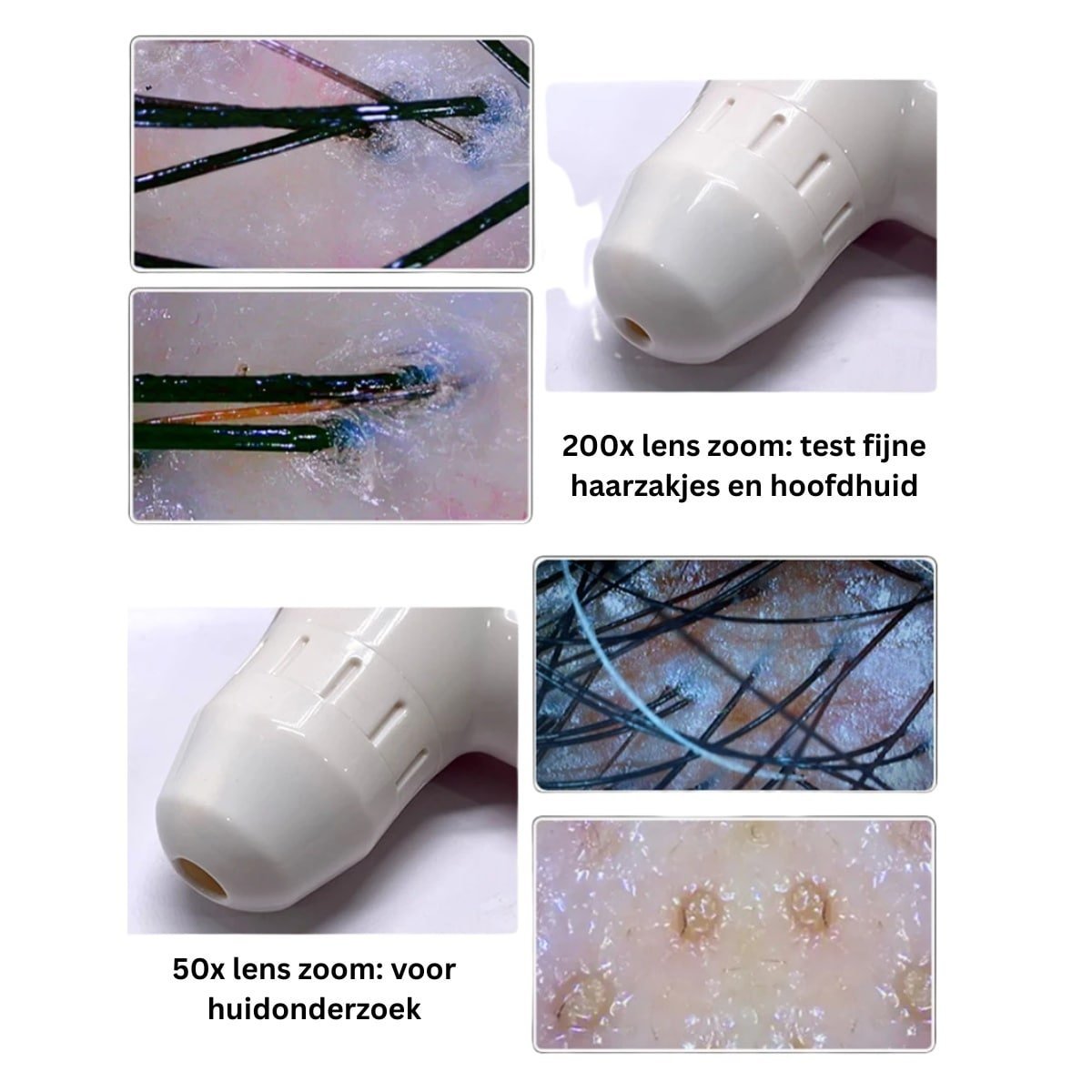
| Scalp Analysis Device | Visual intake before and after treatments | €299 |
The Japanese Head Spa Pro It has an S-shaped mattress and a working height of 80 cm—the European standard for treatment tables. This makes longer treatments more comfortable for both client and therapist. The steam machine and phototherapy are included as standard.
The Mobile Head Spa Deluxe It features a 50-liter clean water tank and a separate 15-liter wastewater tank, so no water connection is required. Popular with salons that want to offer head spa treatments without having to renovate. Both units are delivered within one week in Belgium.
The Scalp Analysis Device (€299 excl. VAT) makes the condition of the scalp visible to the client. From a well-being perspective, this is powerful: a client who sees her own scalp before and after a series of treatments not only experiences the improvement but also sees it. This enhances treatment adherence and client retention.
For which salons does this work less well?
Positioning a head spa as a wellness treatment requires a specific type of customer communication. Customers need to understand what they are coming for — not for a shampoo, but for a treatment focused on scalp rejuvenation and nervous system relaxation.
If your salon relies entirely on quick turnaround times and a full schedule, it’s harder to maintain that positioning. A head spa treatment takes time: at least twenty minutes for the treatment itself, plus the initial consultation and follow-up care. There’s no room for rushing.
Salons that are unable to tell that story to clients – verbally, via social media, or during a consultation – will find that the treatment is not automatically perceived as a luxury or a moment of recovery. The technique works, but the context is just as important.
For salons that are doing it right, that's precisely the story—the scalp as a mirror of inner well-being—that brings customers back. Not just a one-off for a birthday, but monthly as part of self-care. If you want to know how to build that, the MediRelaxa head spa training For this, a concrete framework, including customer communication and treatment protocols. The training lasts two days and costs €750 excl. VAT.